


Series
How AI really works
From 'what is a language model' to 'why our ChatGPT pilot did not stick', in ten 40-second episodes. No hype, one idea each.
After this series you can:
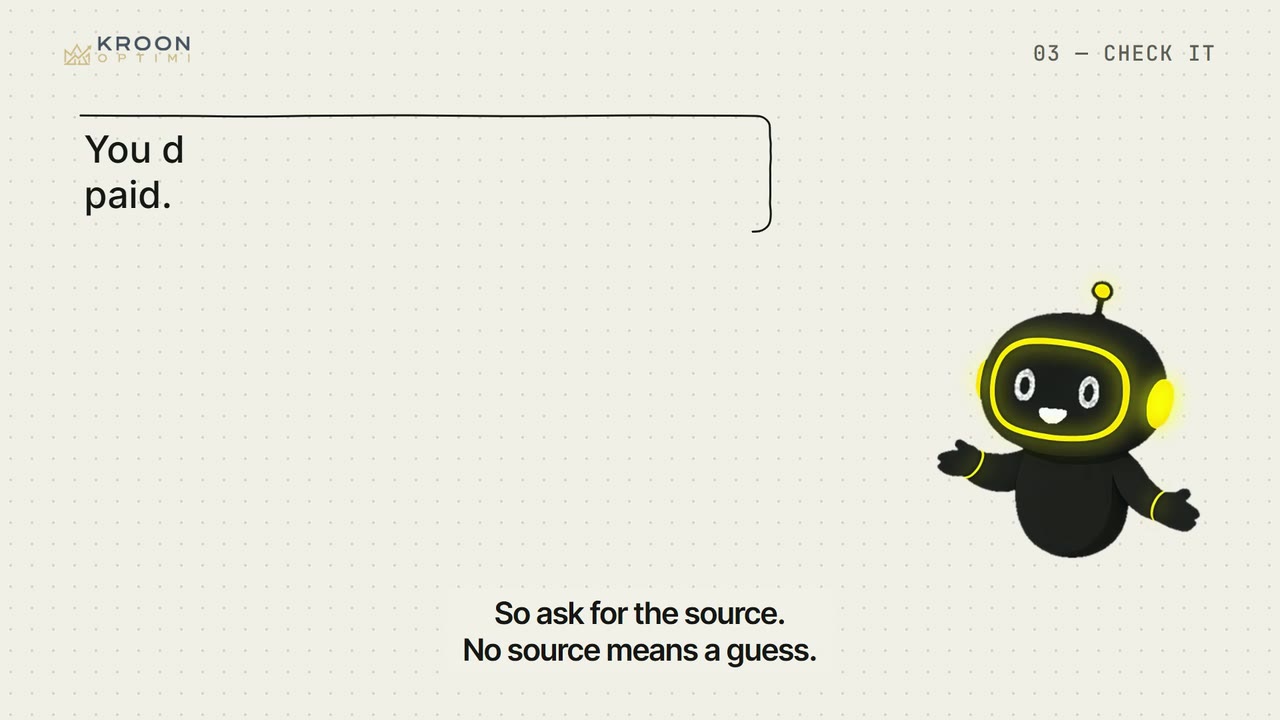
- You recognise an answer without a source as a guess, and ask for the source.
- You choose per task whether lookup, fine-tuning or an agent fits, and where the approval sits.
- You ask a supplier pointed questions about access rights, location and oversight.
01 · Basic
How AI really works
From 'what is a language model' to 'why our ChatGPT pilot did not stick', in ten 40-second episodes. No hype, one idea each.


What this series does not cover
- Which AI product or supplier to choose.
- What AI costs and what it returns in money.
- The rules: the AI Act and GDPR. Those are in the series 'AI and the rules'.
Terms
- language model
- Software that predicts which words likely come next, based on text it read before.
- hallucination
- An answer that sounds sure but isn't true.
- RAG
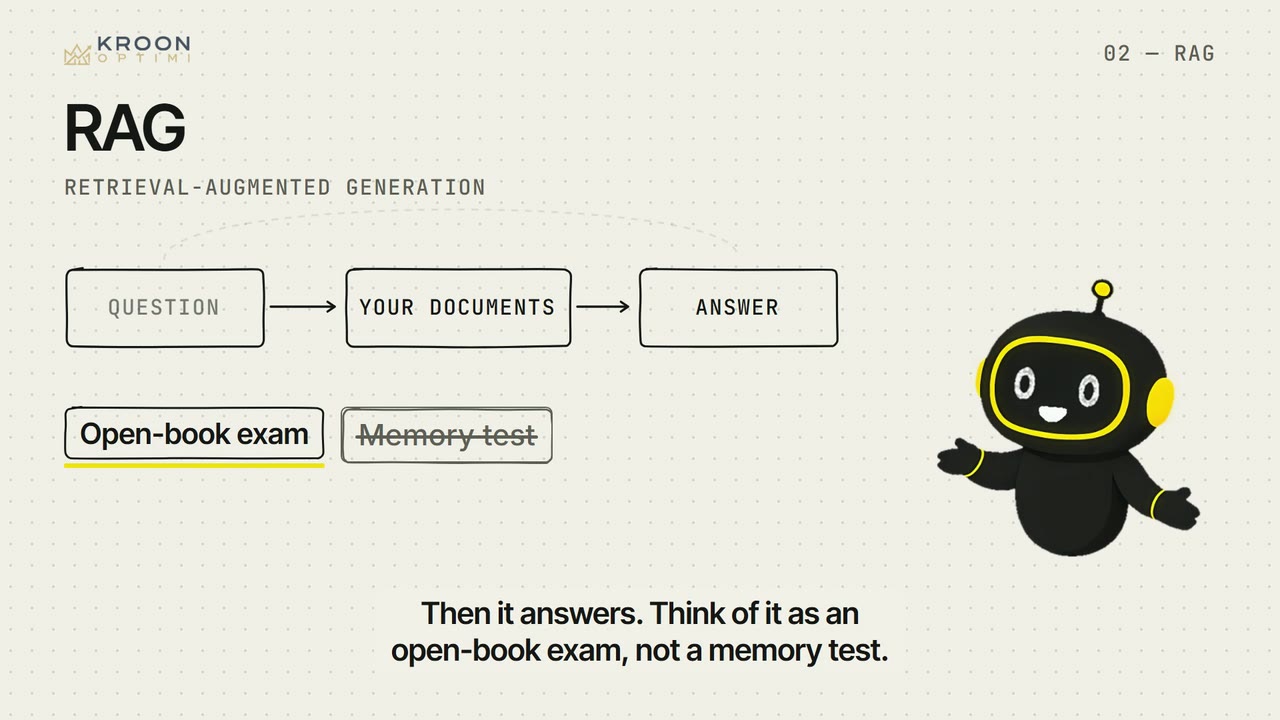
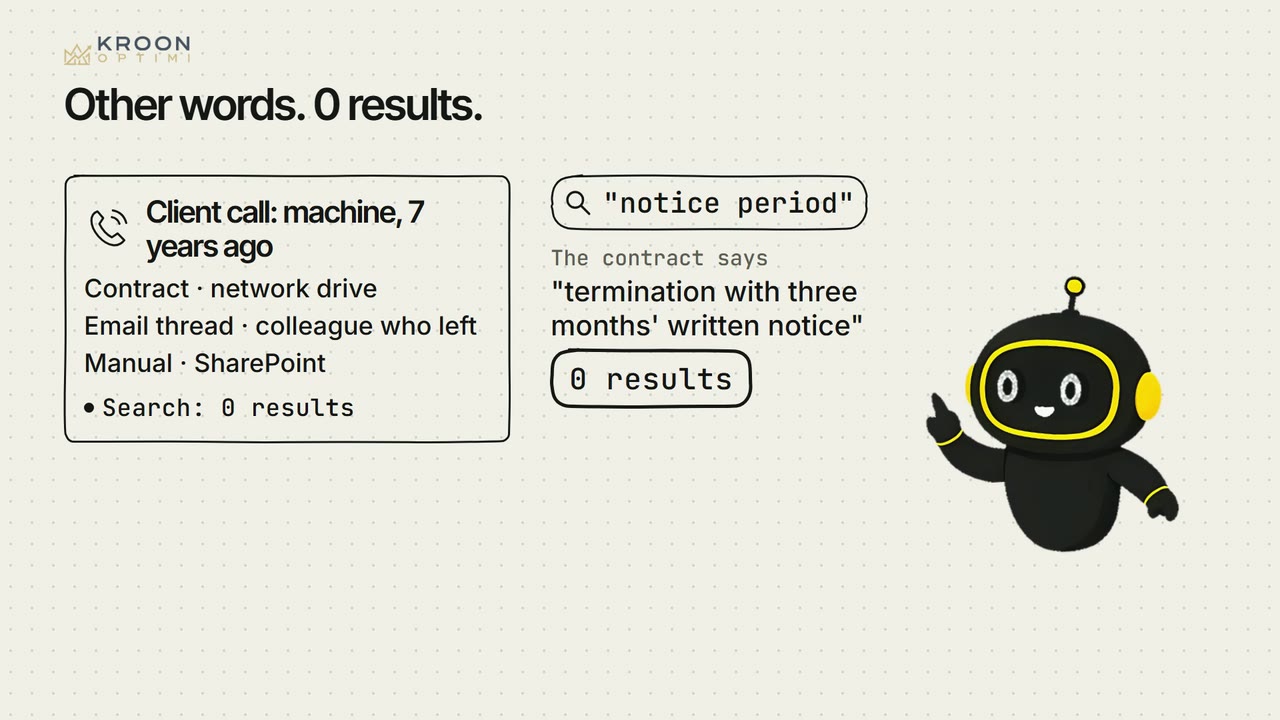
- First look it up in your own documents, then answer, showing the page it used.
- search by meaning
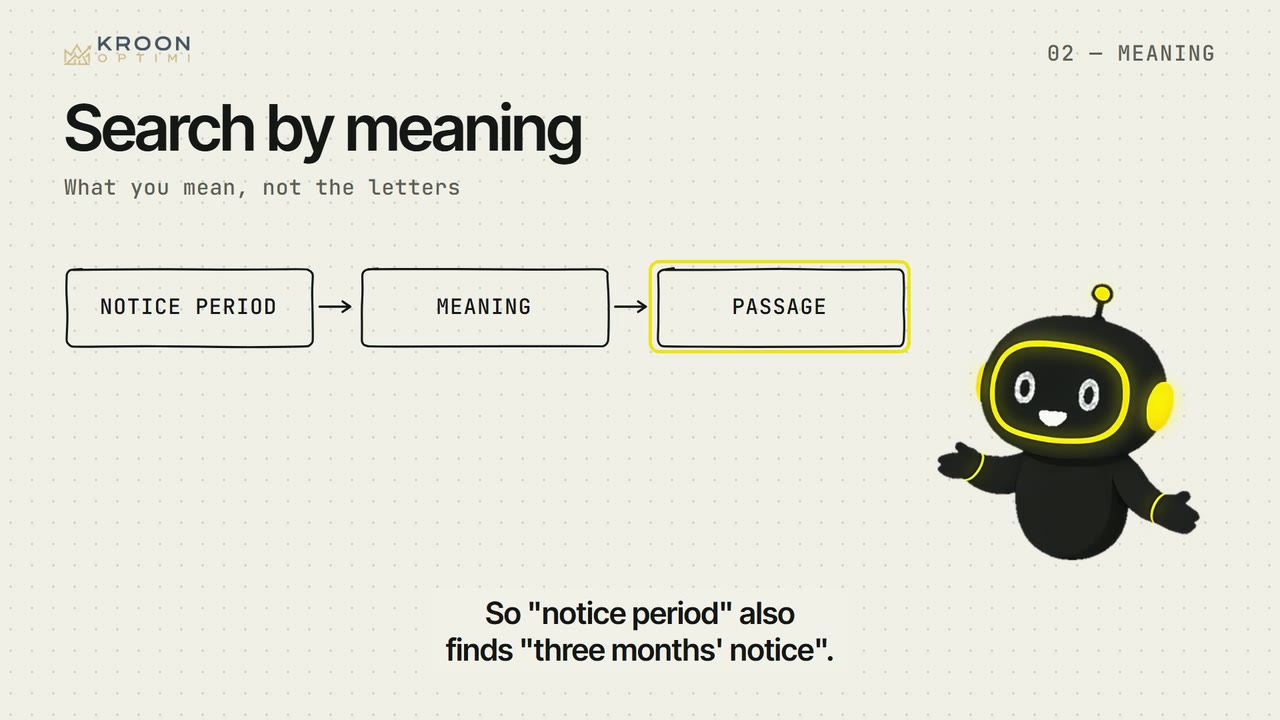
- Search that compares what you mean, not the exact words in the text.
- agent
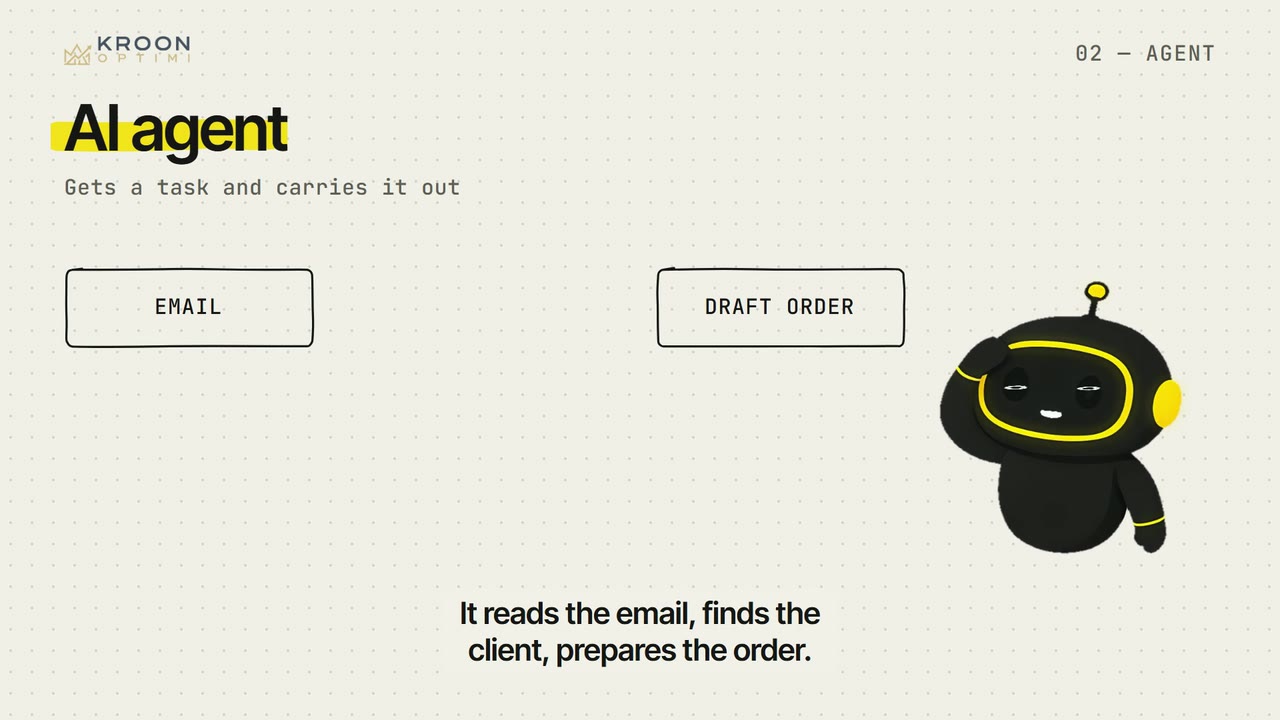
- Software that carries out a task in your systems, within set permissions.
- human approval
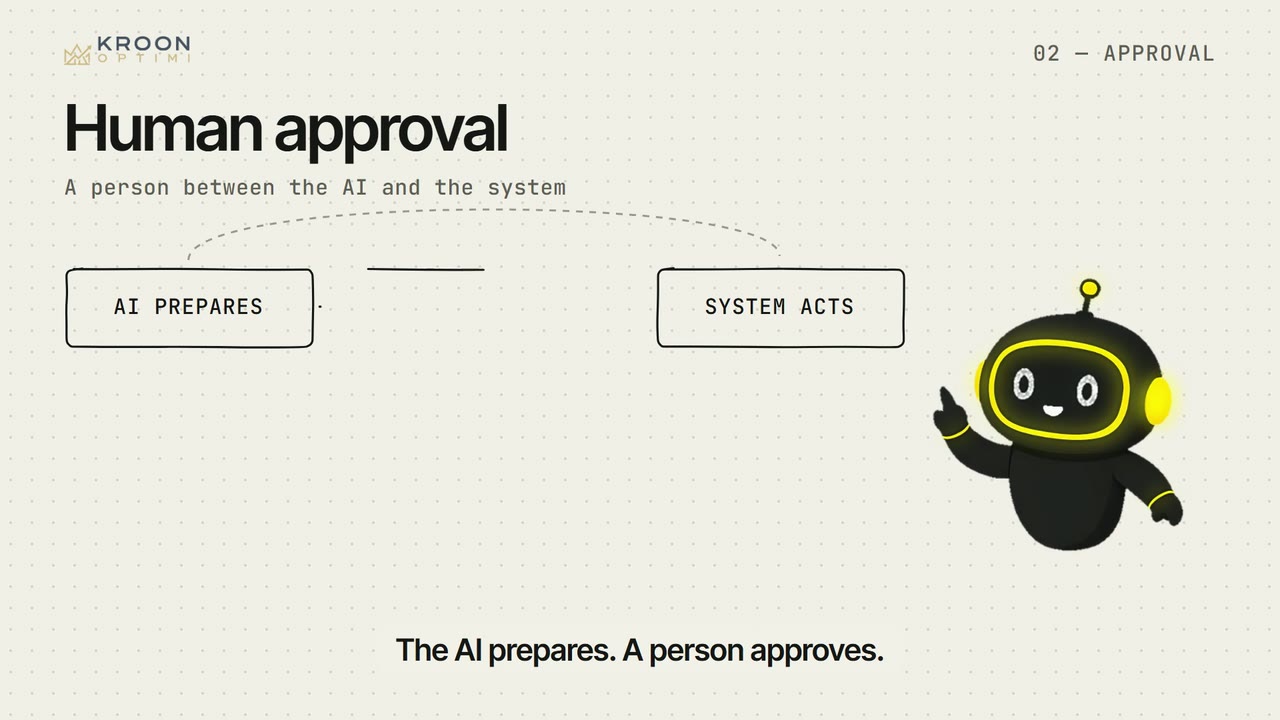
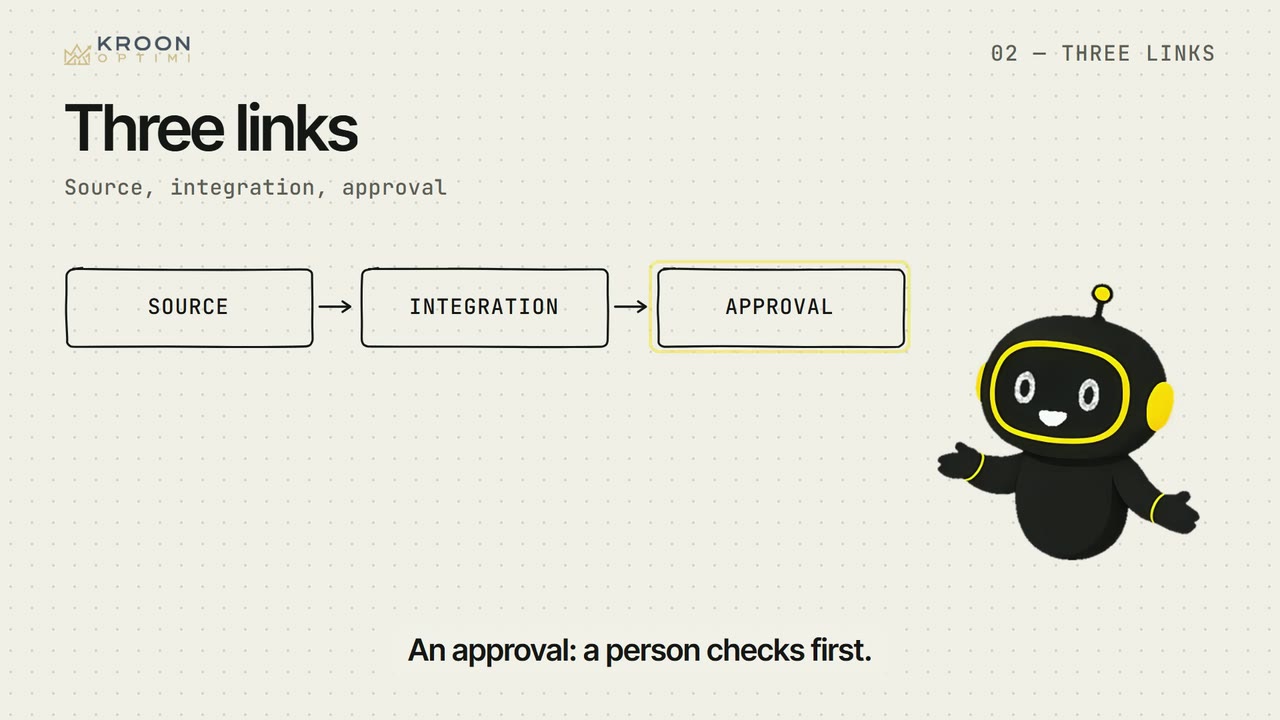
- A person approves before the AI sends, books or changes anything.
- fine-tuning
- Training a language model further on your own examples, to change its behavior.
- private hosting
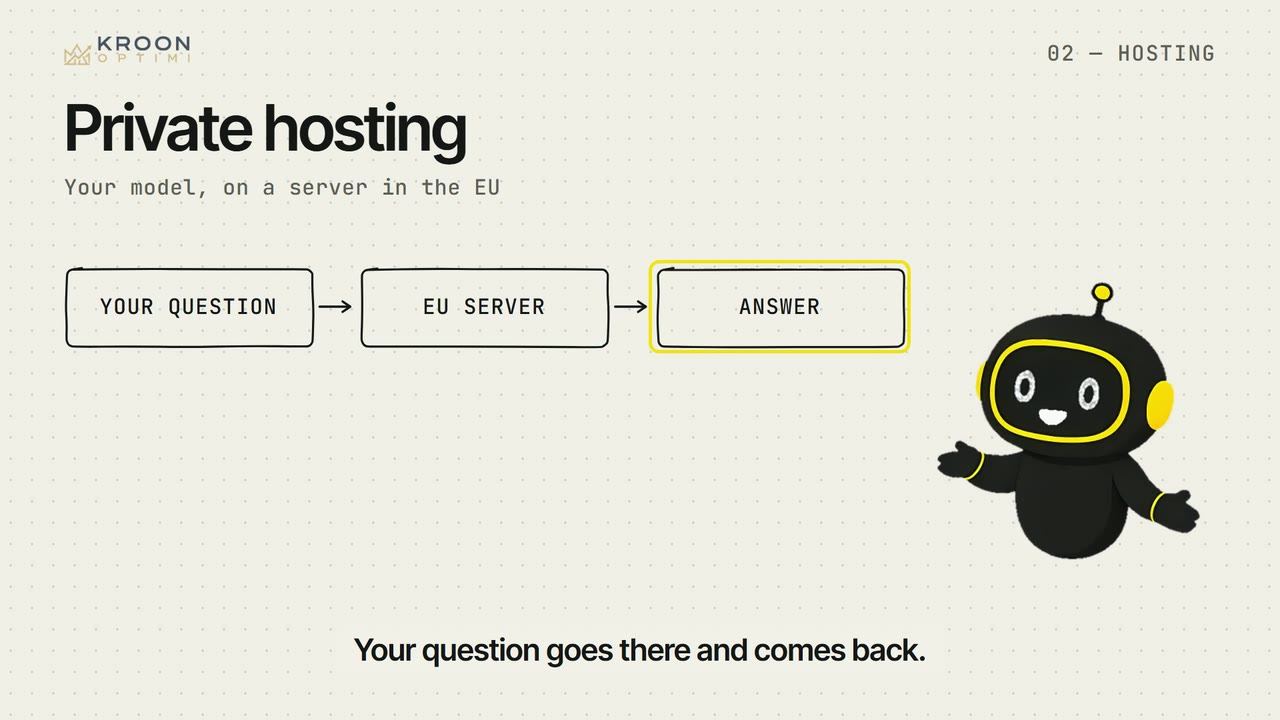
- A language model on a server you rent or own, in the EU.
- three links
- The three things a chat window lacks: a source, an integration and an approval.
