


Series
Cloud without surprises
What the cloud is, how you move without downtime, and a bill you can explain.
After this series you can:
- You decide per system whether it moves to the cloud, stays local or stays put for now, and why.
- You choose a fitting cloud form per workload and name where that form does not fit.
- You make visible what runs where, who has access, and what each part costs.
07 · Basic
Cloud without surprises
What the cloud is, how you move without downtime, and a bill you can explain.


What this series does not cover
- Which cloud provider or brand to choose.
- What the cloud costs in euros per month.
- The office network and workstations; those are in the series 'Network and workplace'.
Terms
- cloud
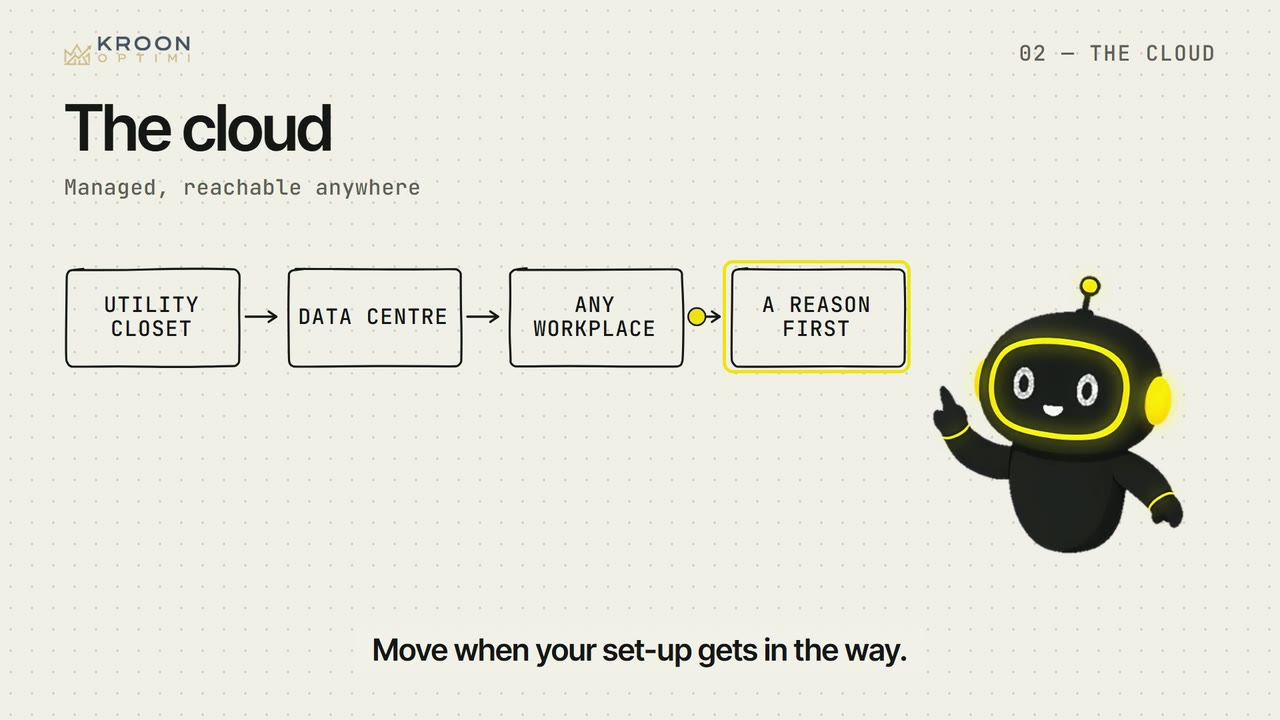
- Your servers, files and programs in a managed data centre, reachable from any workplace.
- hybrid cloud
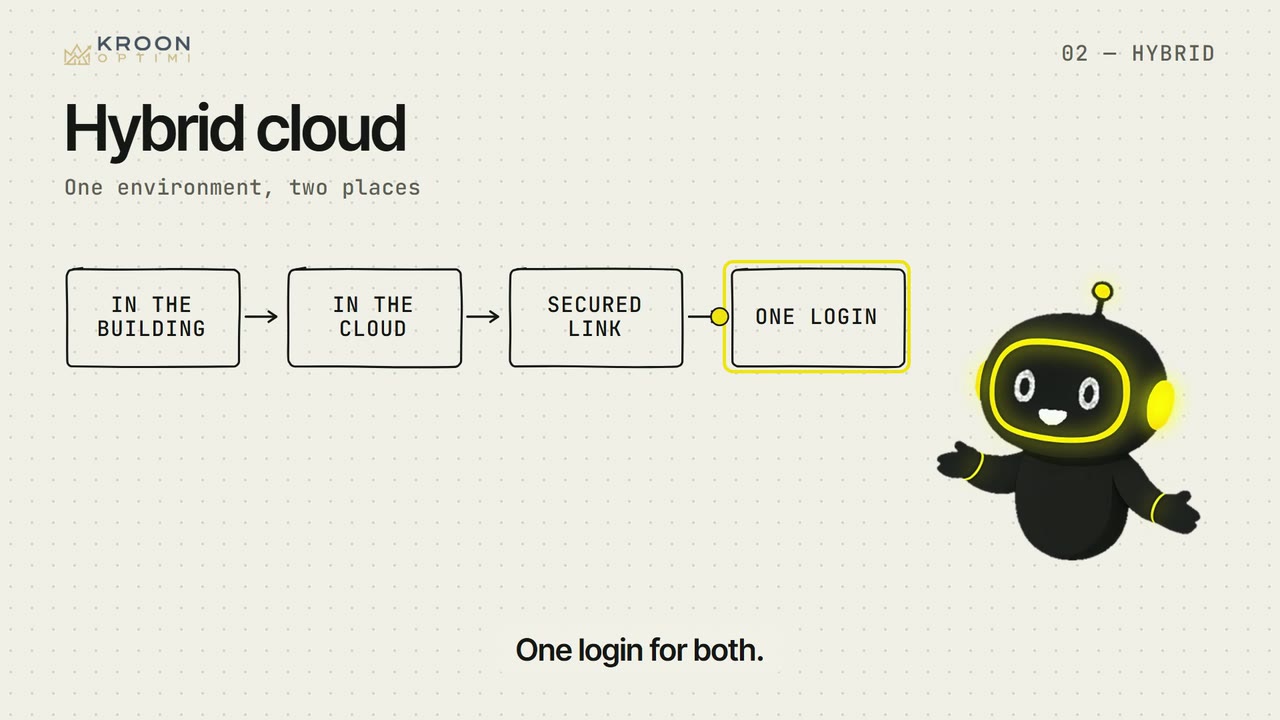
- One environment, two places: what must stay local stays, the rest goes to the cloud.
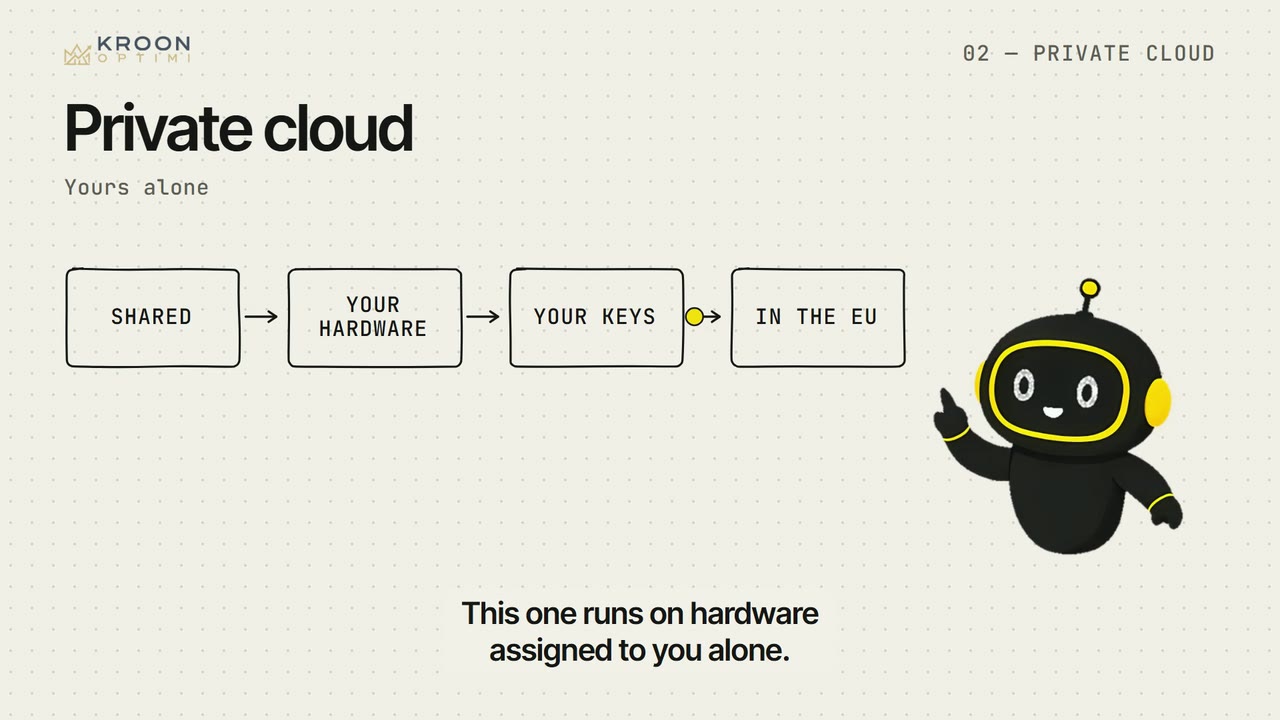
- private cloud
- A cloud environment on hardware assigned to you alone, with its own network and keys.
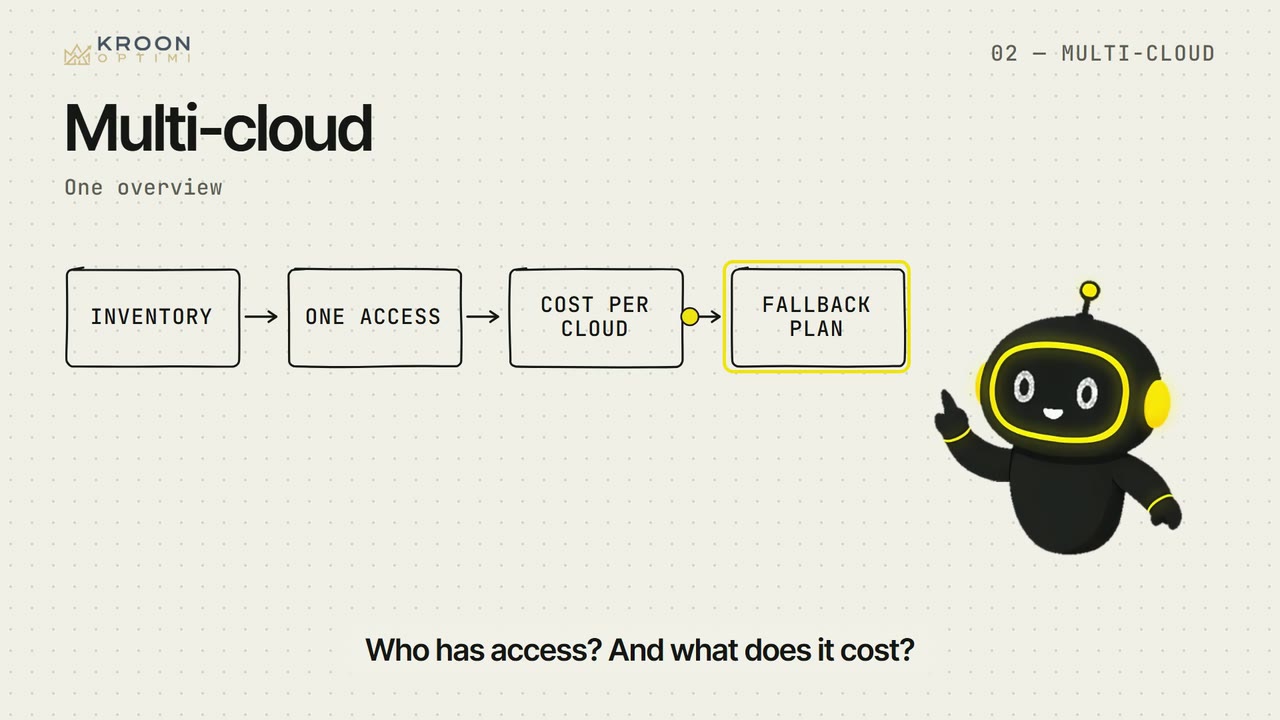
- multi-cloud
- Using several cloud providers at once, with one overview of access, costs and fallback.
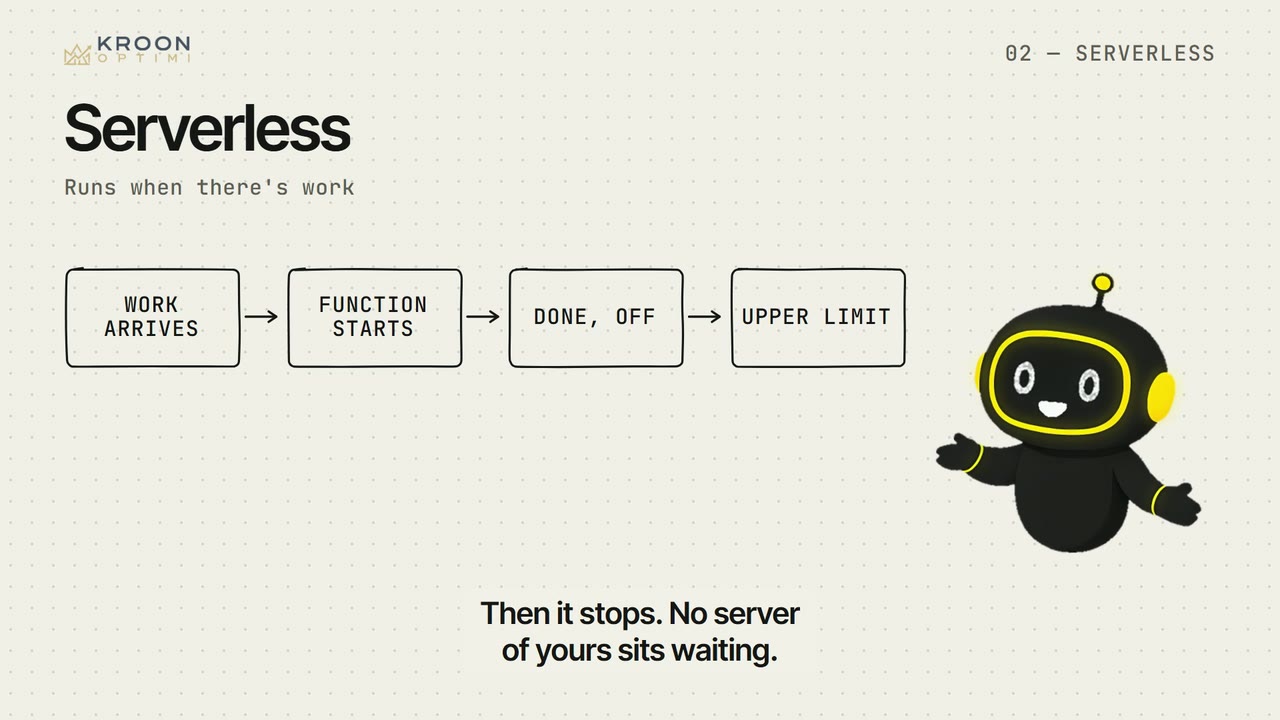
- serverless
- Code that starts as a separate function when there is work, with no waiting server.
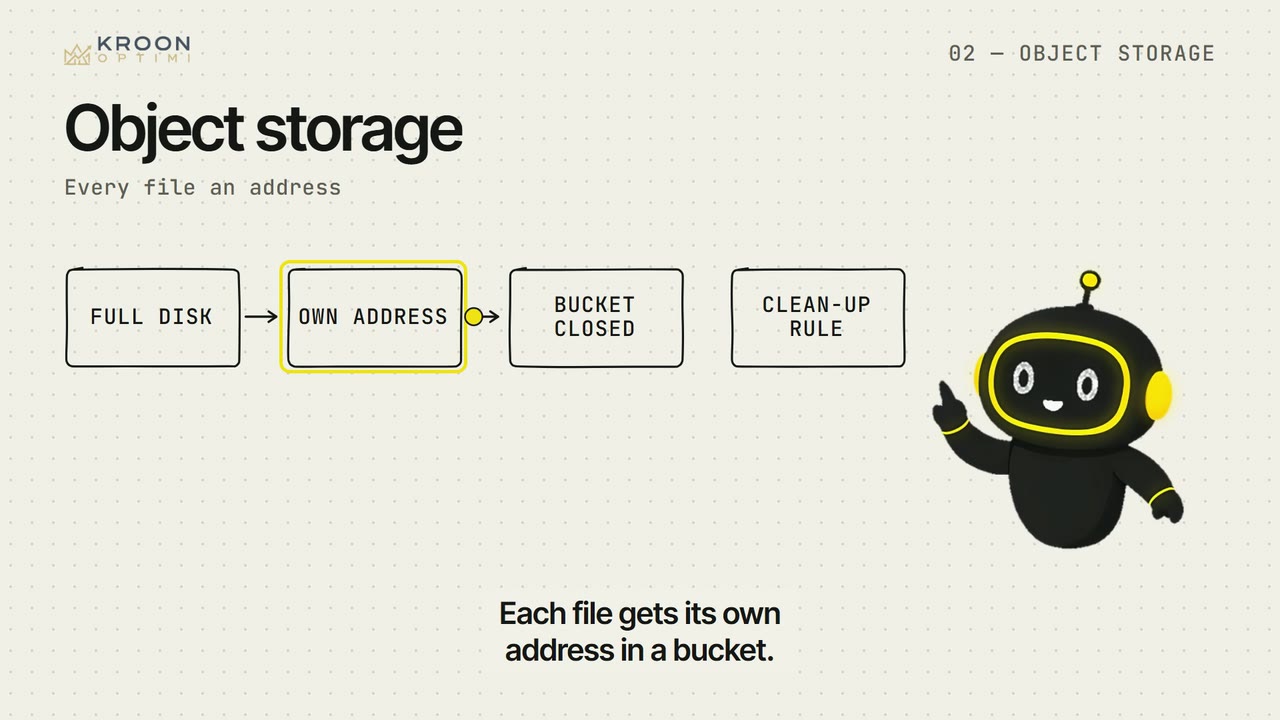
- object storage
- Storage where each file gets its own address in a bucket, apart from your server.
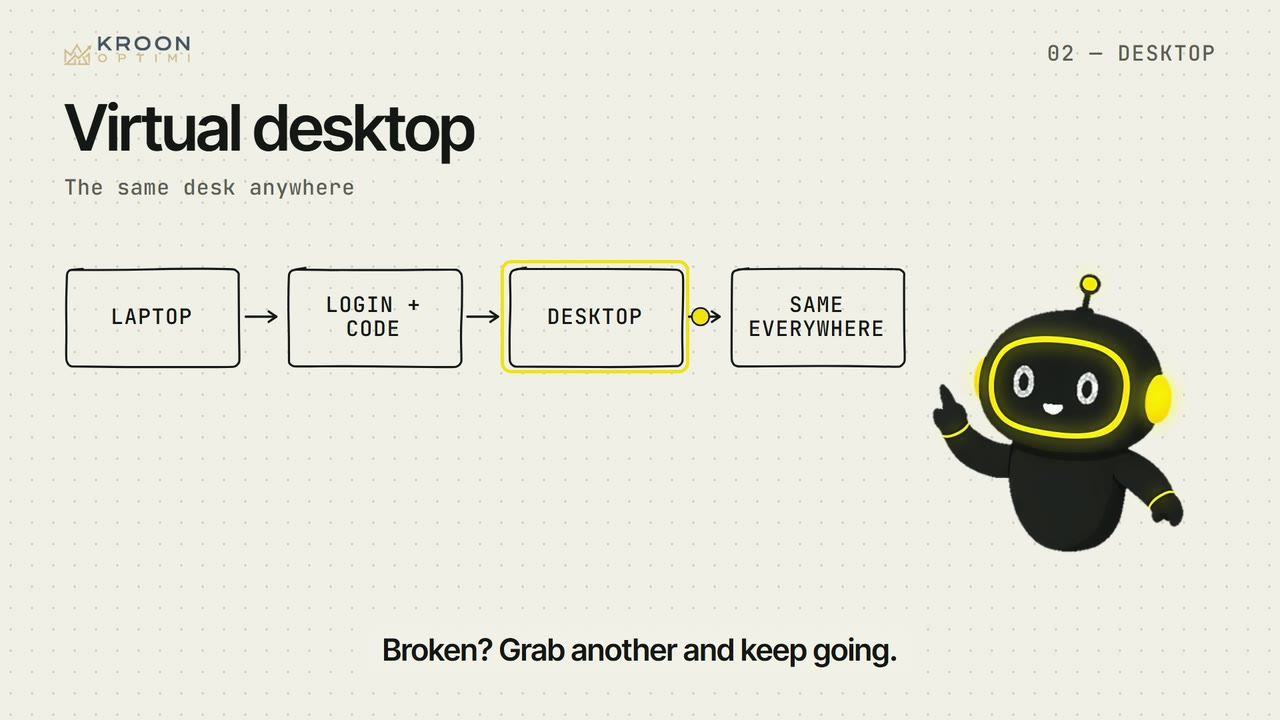
- virtual desktop
- A desktop that runs in a data centre; your device is only screen and keyboard.
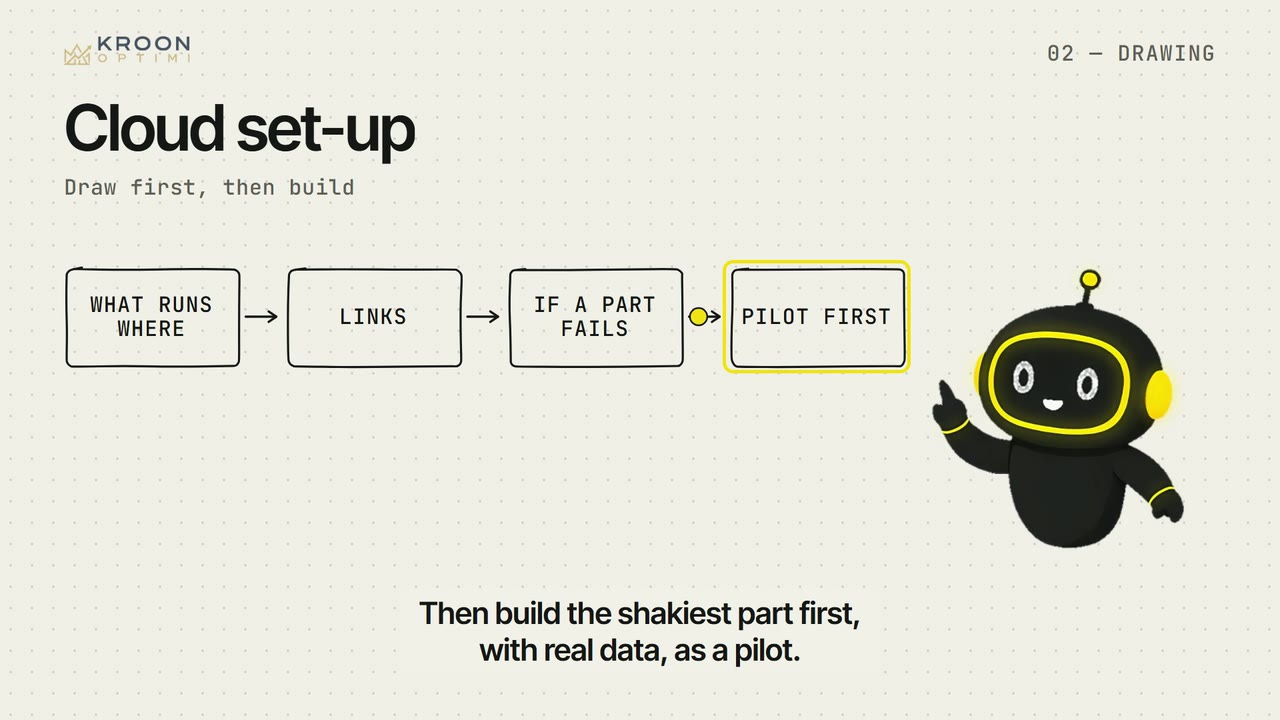
- cloud architecture
- How your cloud fits together: which parts run where, how they connect, what it costs.
