


Series
AI and the rules
The AI Act, Article 4 AI literacy and GDPR-proof AI in plain language: what a company of 10 to 100 people has to arrange, and what it does not.
After this series you can:
- You place an AI use in a risk class and spot when it moves to high risk.
- You arrange per role what people learn about AI and who approves, and you record it.
- You put the four privacy questions to an AI supplier and spot when a DPIA is needed.
02 · Basic
AI and the rules
The AI Act, Article 4 AI literacy and GDPR-proof AI in plain language: what a company of 10 to 100 people has to arrange, and what it does not.


What this series does not cover
- What applies when you build or sell AI yourself, such as CE marking.
- Legal advice for your situation. If in doubt, ask a lawyer or privacy adviser.
- How Dutch supervision will work. That law is not in force yet.
Terms
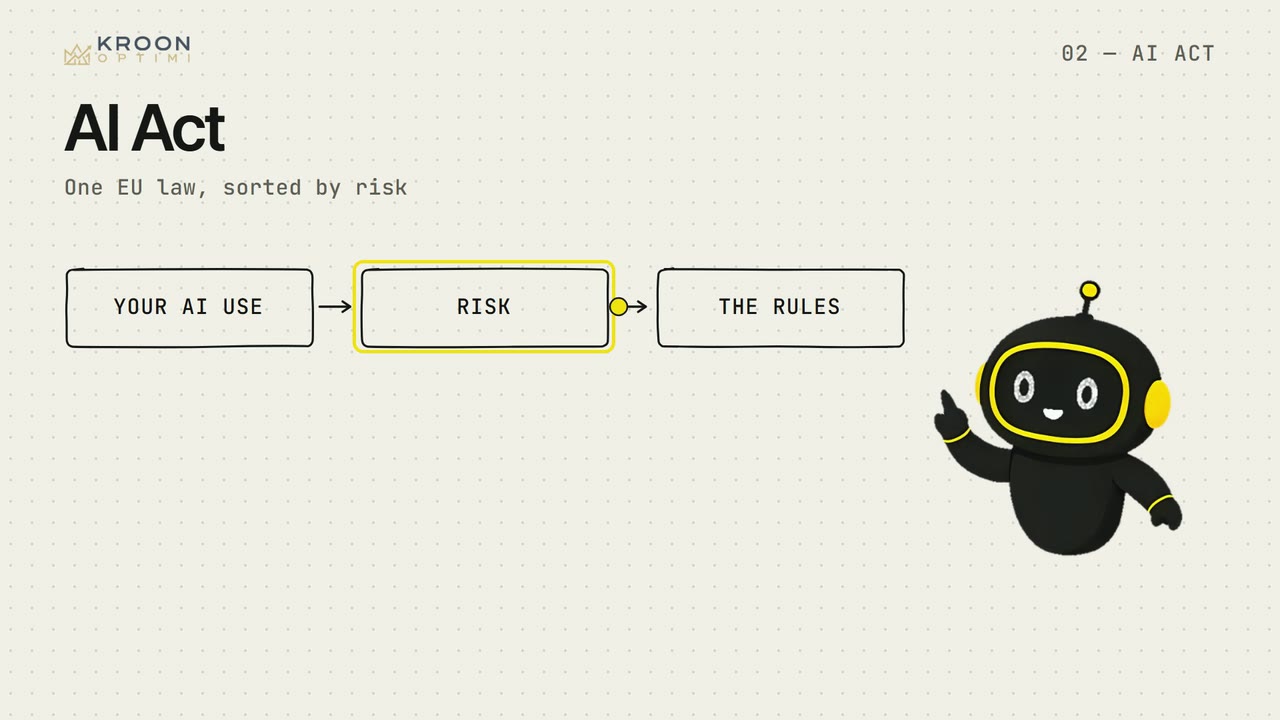
- AI Act
- One EU regulation for AI: the higher the risk to people, the stricter the rules.
- risk classes
- Four levels in the AI Act, from prohibited to minimal, by risk to people.
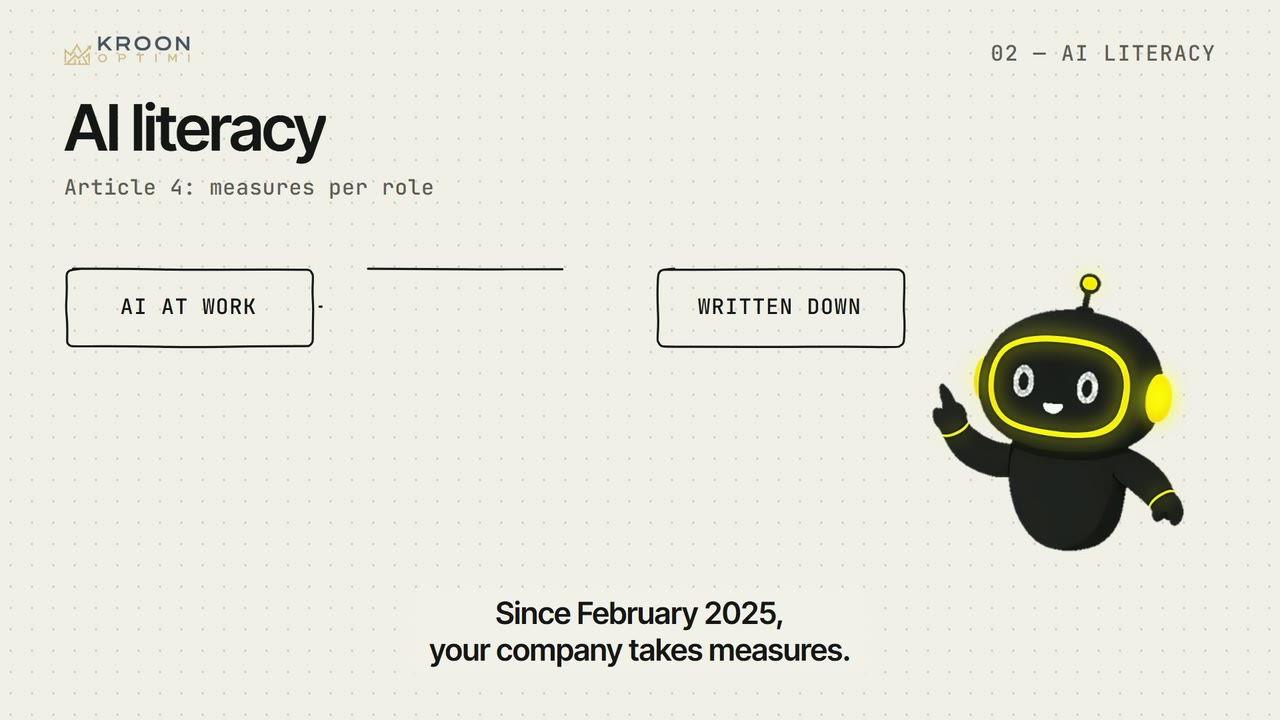
- AI literacy
- Measures per role, so everyone using AI learns what that role needs.
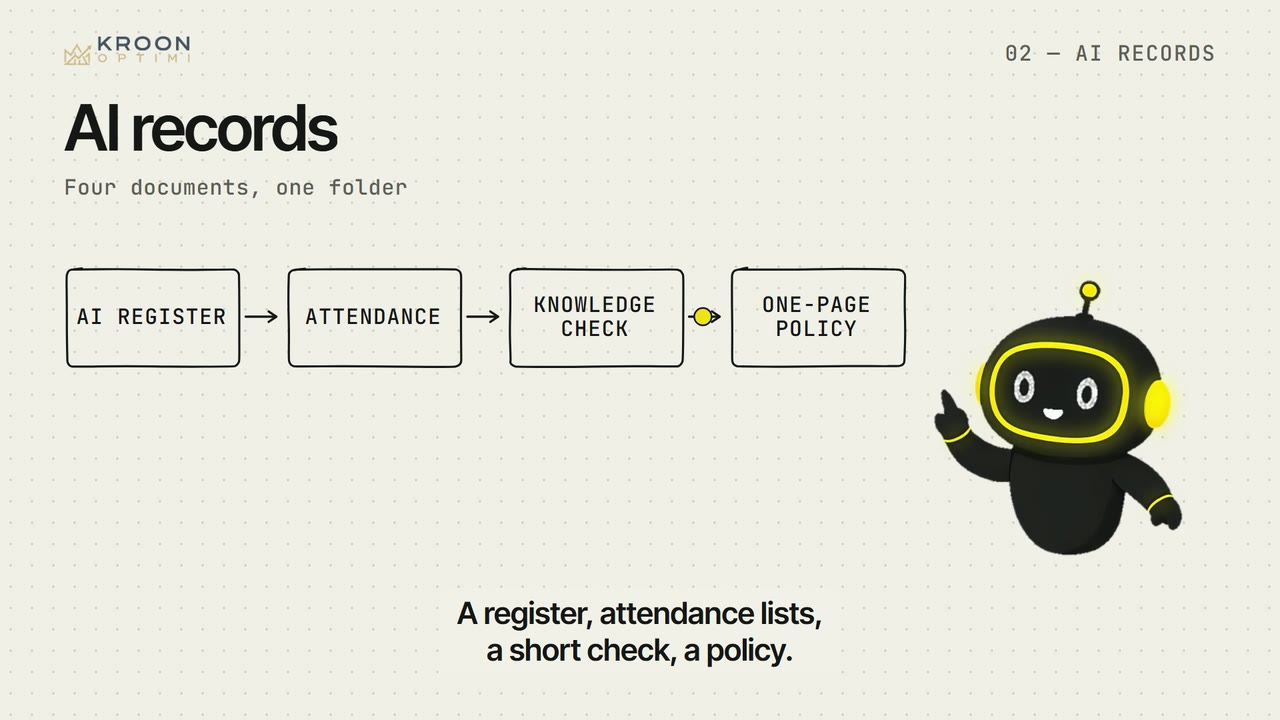
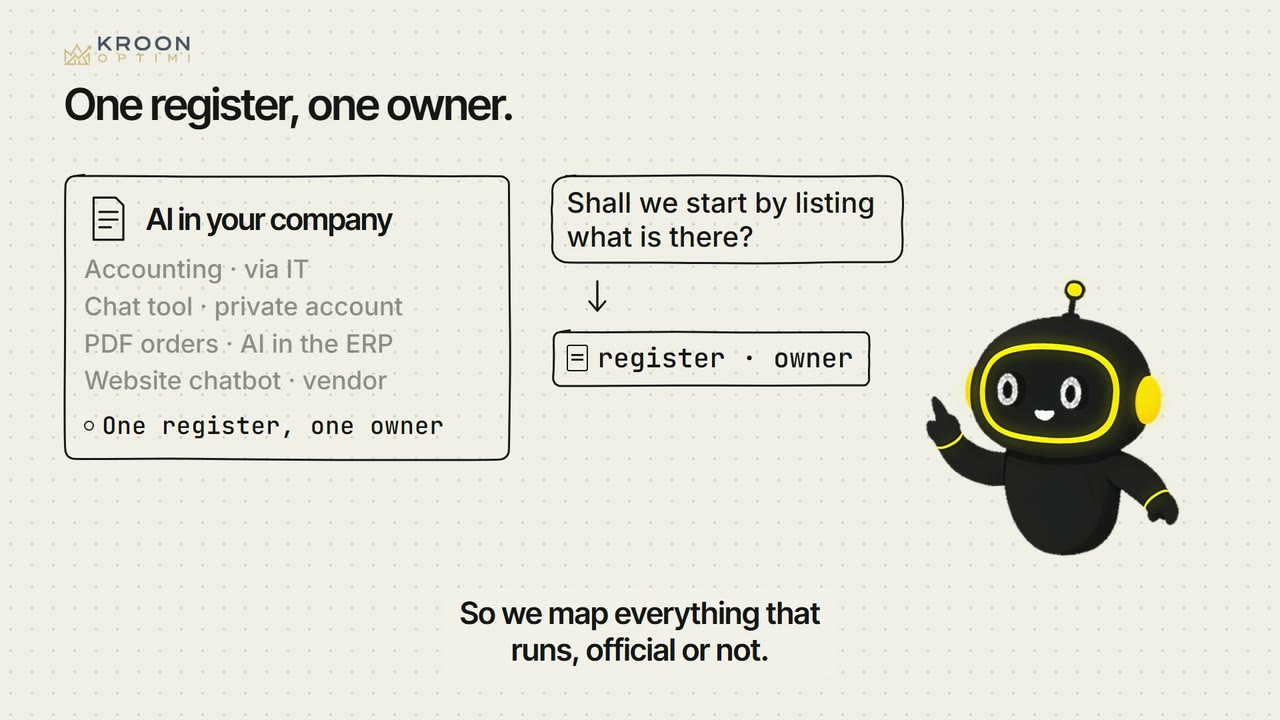
- AI records
- The four documents in one place that show what you did for AI literacy.
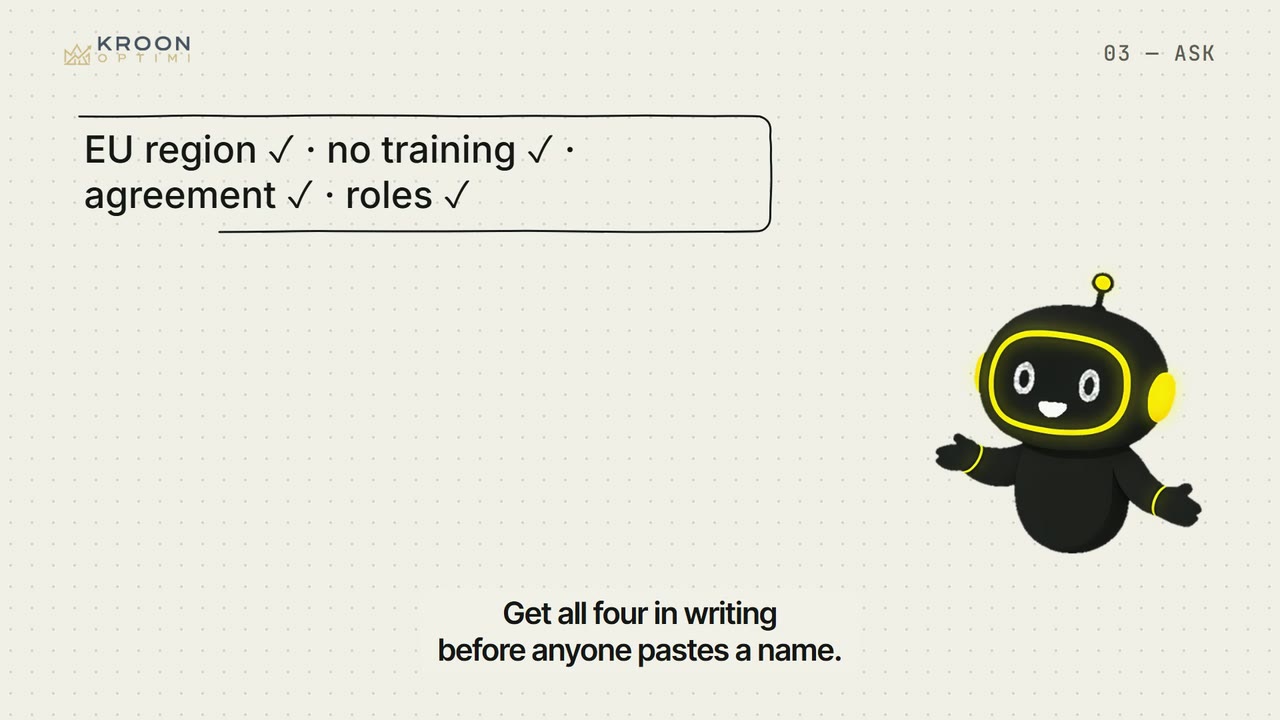
- four checks
- Four supplier questions: EU region, no training, processing agreement, access per role.
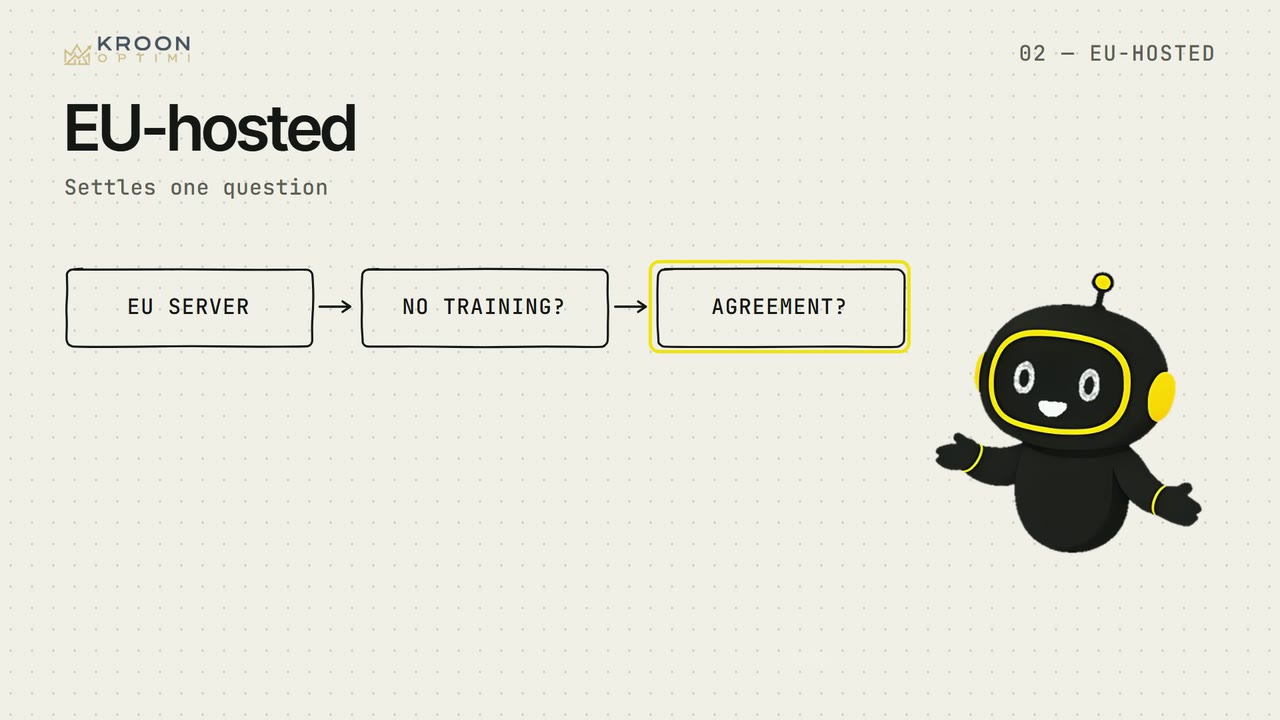
- EU-hosted
- The model runs and stores your data in a data center inside the EU.
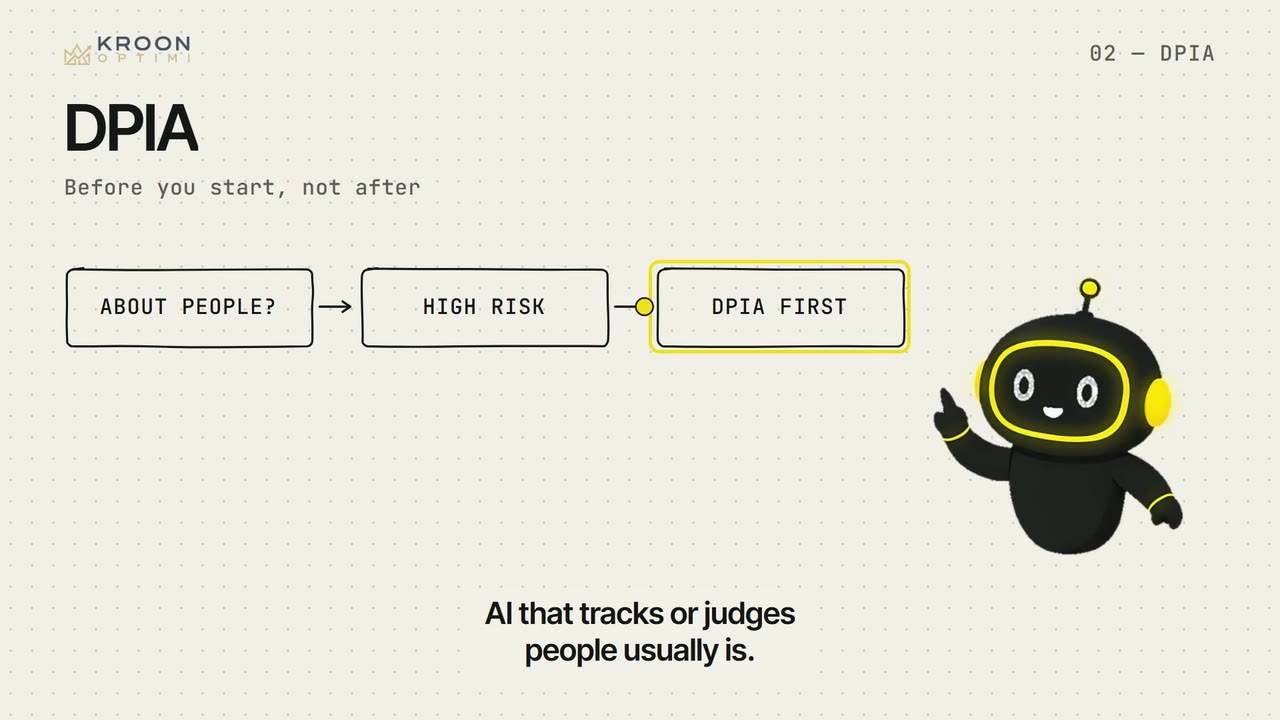
- DPIA
- A privacy impact assessment you do before processing that is likely high risk.
- human oversight
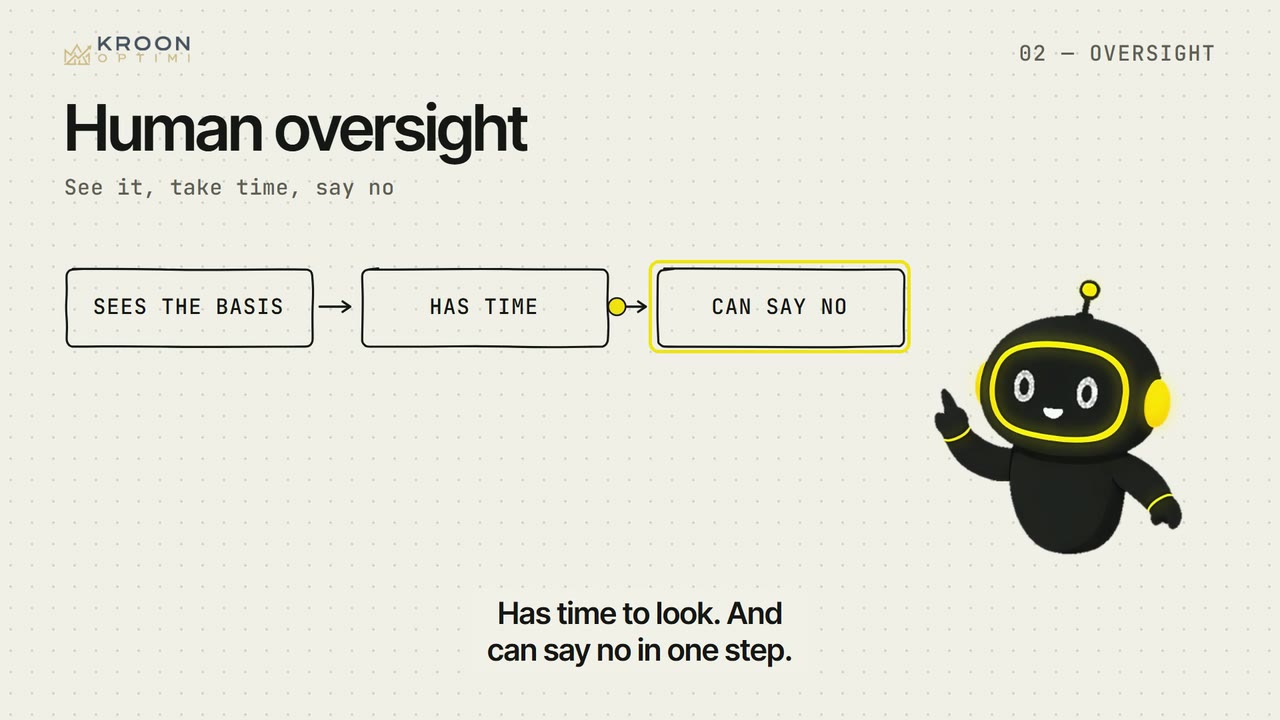
- A person who can see, weigh and overrule what the AI advises.
- AI policy
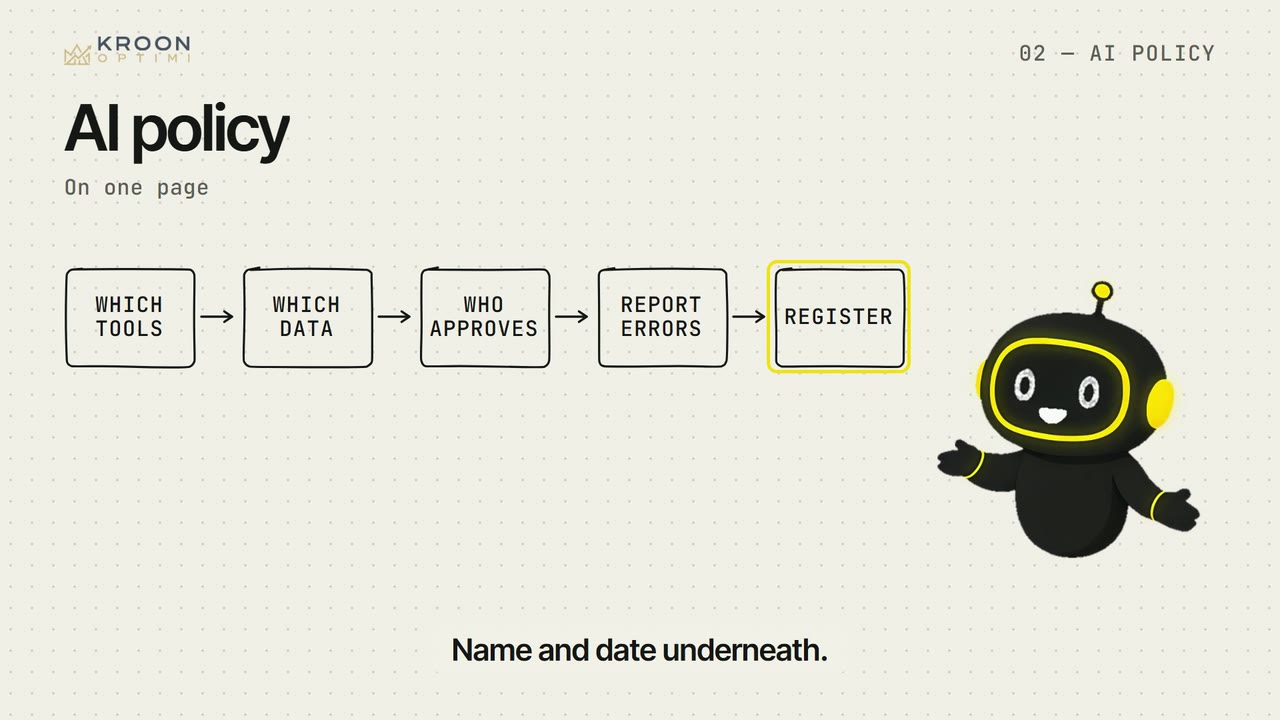
- One page of AI rules: tools, data, approval, errors, register; name and date.
